
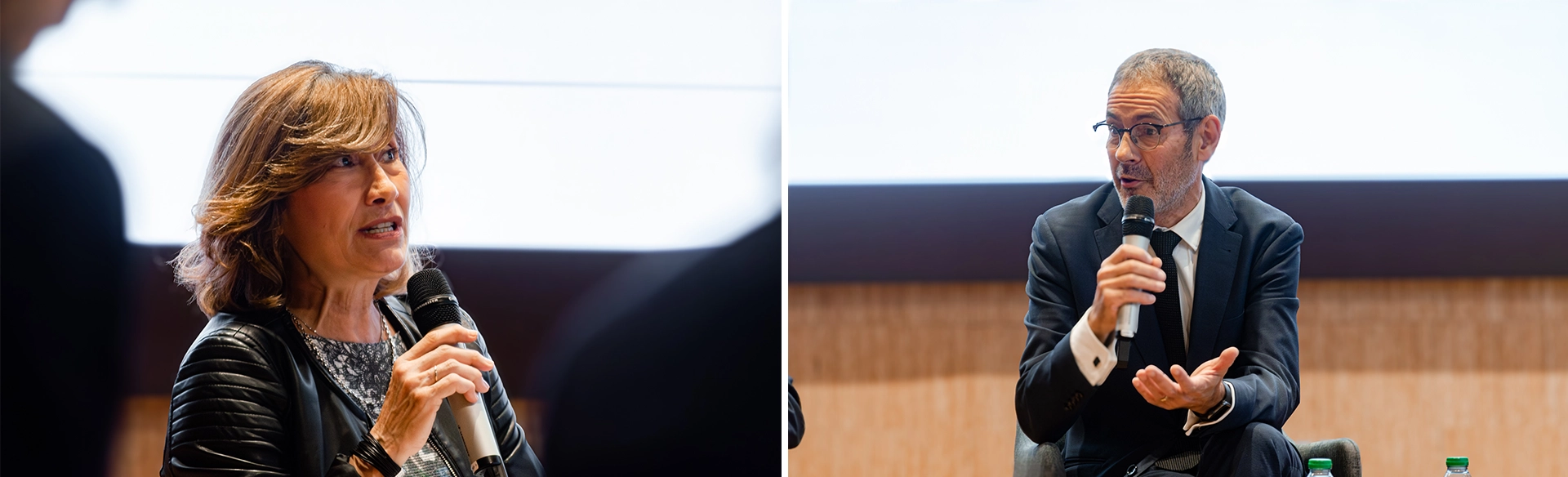
Legislative trends: retirement, working hours and parental leave
In her speech, Yolanda Valdeolivas reviewed the latest pension reforms, highlighting the new features introduced by Royal Decree-law 11/2024, which has been in force from 1 April 2025. Among them, she explained the changes in active retirement, which makes it possible to combine pension and work depending on the delay in retirement age; partial retirement, which requires the hiring of a full-time replacement; and delayed retirement, which provides financial incentives for voluntarily delaying retirement.
Valdeolivas also analysed trends in working hours, marked by the collapse of the Working Time Reduction Bill, which failed to achieve the necessary parliamentary support. In this context, she noted that the government seems determined to strengthen the rules on registering working hours, which is seen as one of the key measures in the coming months.
Valdeolivas also explained the reform introduced by Royal Decree-law 9/2025, which extends the birth and childcare leave financially compensated by a Social Security benefit by three additional weeks, so that one of the extended weeks can be taken until the child is 12 months old, while the other two are recognised until the child is 8 years old, with no change to the parental leave regime. There is also more protection for single parents, who accumulate the leave that would have corresponded to the other parent.
Case law chronicle: Gold, silver and bronze
Manel Hernàndez went on to present a selection of the most significant rulings handed down by the Supreme Court and the National High Court between June and September 2025, on matters such as salary supplements, the employer’s disciplinary powers and accidents at work.
Hernàndez highlighted three key rulings, awarding them gold, silver and bronze medals in order of their significance:
The session concluded with a question-and-answer session in which participants discussed the practical implications of these new regulations and case law for both companies and workers.